Repair Is Often Possible
- Yes, a microwave that leaves lunch cold can often be repaired after the failed part is identified.
- The appliance's condition, replacement part availability, and the work needed determine whether repair makes sense.
- Internal microwave repairs belong with your technician; never remove the outer case, even after unplugging the appliance.
Repair Options for Everyday Appliance Failures
Microwave Repairs When Lunch Stays Cold
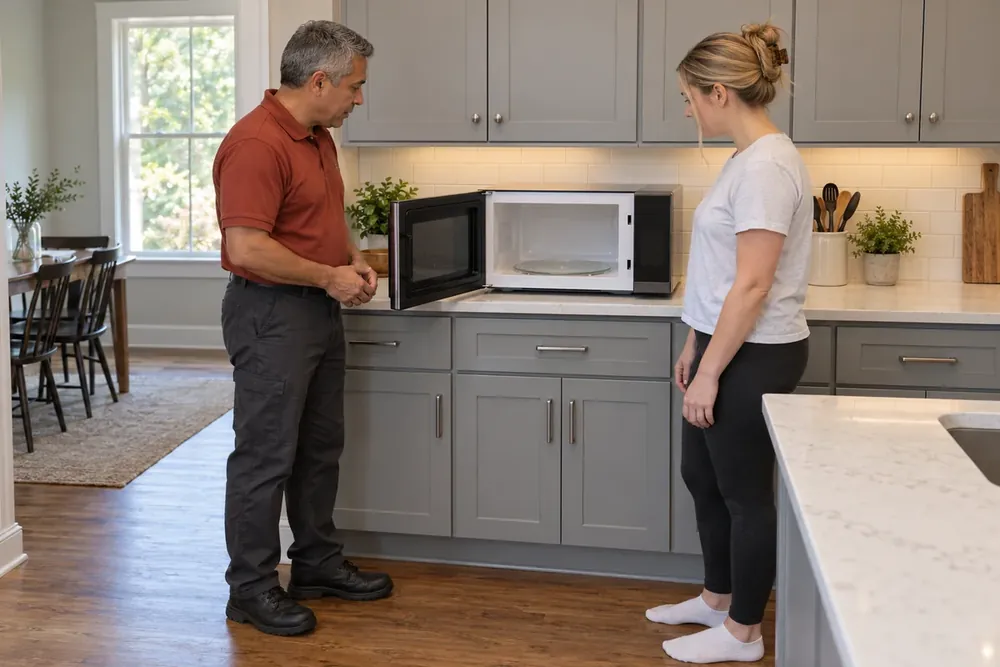
At lunchtime, a microwave oven that leaves food cold can often be repaired. A failed heating component or door switch may be responsible, and your technician checks the fault against the model's design. Part availability and damage to the door or cooking cavity affect the decision. GE Appliances warns that internal components can retain dangerous voltage after unplugging, so never remove the case. Call with the symptom; stop using a microwave with a damaged door, as the FDA advises.
Refrigerator Compressor Replacement and Cooling Repairs
At breakfast, refrigerators that feel warm can often be repaired even when a compressor has failed. A refrigerator compressor generally needs replacement rather than an internal repair, but poor cooling alone does not identify a failed compressor. A fan, door seal, or temperature control can cause similar symptoms. Your technician tests the cooling system and weighs the needed parts against the refrigerator's condition. Keep the doors closed while arranging refrigerator repair, and never open the sealed refrigerant system.
Dishwasher Repairs After Water Reaches the Floor
After dinner, a dishwasher that leaks can often be repaired once the water's source is found. A worn door seal, damaged hose, or pump problem may explain the puddle. A cracked tub can make replacement a more practical choice. Your technician checks where the leak begins and whether surrounding components are damaged. Stop the cycle at the controls if safe, and keep away from water near electrical parts. Avoid pulling the appliance out or removing its covers.
Washer Repairs When the Spin Cycle Stops
On laundry day, a washer that leaves clothes soaked is often repairable. A drainage fault, door lock problem, or worn drive component may prevent spinning. Your technician checks whether the washer drains and tests the parts that control drum movement. An error message helps identify the right model-specific checks; read the exact code out on the call. Leave covers and internal parts alone, and do not force a locked door open.
Dryer Repairs When Towels Stay Damp
At the end of a laundry cycle, a dryer that leaves towels damp can often be repaired. Poor airflow or a failed heating component may be responsible, although some cycles intentionally use no heat. Your technician checks the selected cycle, airflow, and heating operation to identify the cause. You can clean the lint screen while the dryer is off, but leave internal gas and electrical parts alone. Stop using the dryer if it smells scorched.
Oven Igniter Replacement for Missed Dinner Plans
During dinner prep, a gas oven that will not heat may need a replacement igniter. Whirlpool identifies a faulty igniter as one possible cause of a cold gas oven, rather than proof that the whole range needs replacement. Your technician checks the ignition system and selects the correct part for the model. Do not open gas components or attempt an igniter repair yourself. If you smell gas, touch no switches, leave, and call the gas utility or 911 from outside.
Ice Maker Repairs After the Bin Runs Empty
At a summer meal, an empty ice bin does not necessarily mean the whole ice maker needs replacement. A water supply restriction or failed component may be responsible. Your technician checks filling, freezing, and ice release to decide whether a part or complete assembly is needed. Whirlpool distinguishes ice production problems from dispensing problems, so describe whether ice is missing from the bin or simply will not come out. Do not force frozen parts or open refrigerant components.