From Your Call to the Appliance Check
When dinner stops because the range will not heat, call and say which appliance failed and what it is doing. The symptom starts the conversation; you do not need to know the faulty part. Your technician uses that description to begin planning the examination.
Describe what interrupted the day
When the morning wash stops halfway through, describe what happened in ordinary words. Say whether water remains inside, whether the drum moves and whether a message appears. A draining problem needs different checks from a door that will not latch. Share the exact display code during the call without guessing what it means.
Give your town and the appliance type. For a range or dryer, mention gas or electric if you know. A brand, model label or recent change can help, but none is a requirement for calling. A description such as “the drum turns but the towels stay cold” is useful on its own.
Let the examination identify the cause
When a refrigerator warms during breakfast prep, the visit checks why cooling has changed. Your technician examines the appliance and tests the relevant functions. Airflow, a door seal and a control fault can produce overlapping symptoms. Describe noises or temperature changes you noticed rather than choosing a replacement part from a symptom alone.
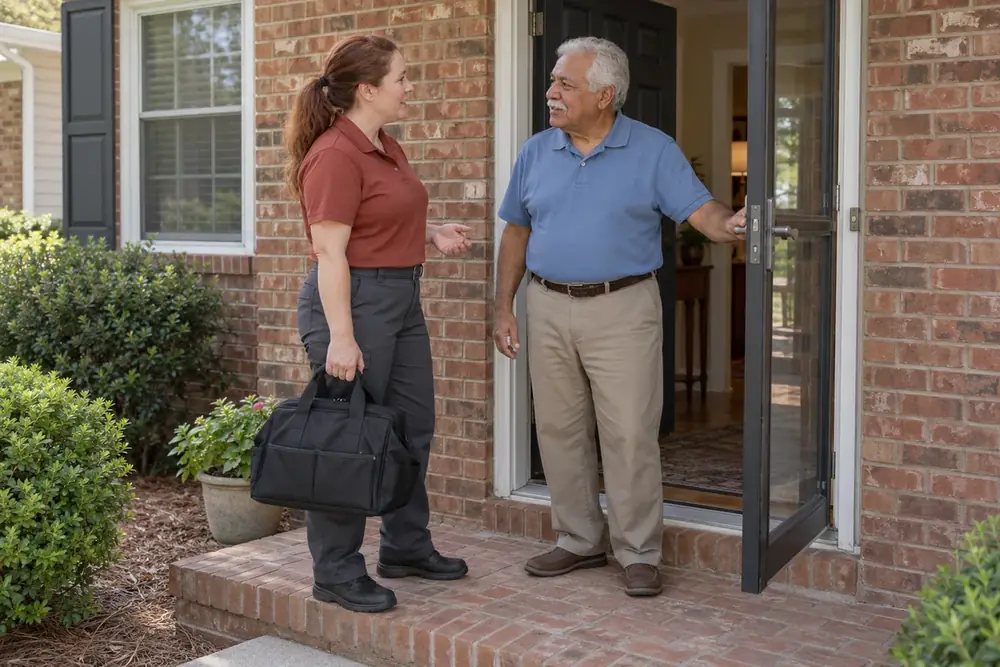
One of our local appliance repair partners discusses the findings, proposed work and price with you before starting repairs. After hearing the details, the choice to go ahead rests with you. The discussion also covers a part that needs ordering and the next visit needed to fit it.
Check the function after repair
When a dishwasher leaves dinner plates dirty, the repair needs a check of washing performance afterward. Your technician repairs the identified fault and runs the appropriate function to check the result. Heating, draining, movement and cooling checks depend on the appliance and the work performed.
Some parts must be ordered for the exact model. Your technician explains the part involved and discusses the return visit. Keep any new symptoms for that conversation, especially a change from the original fault. Ask what the appliance can safely do while the repair remains unfinished.
Keep the waiting period simple
When laundry stops with an unusual noise or a leak, stop using the affected machine. Switch the appliance off at its controls, or unplug it only when the plug is easy and safe to reach. Avoid repeated attempts to force another cycle.
For a warm refrigerator or freezer, limit door opening. When a gas odor interrupts cooking, leave without touching switches and call the gas utility or 911 from outside. The appliance repair conversation follows the emergency response. Share any remaining fault during that call so the visit addresses what is happening now.